River Birch in NoMA
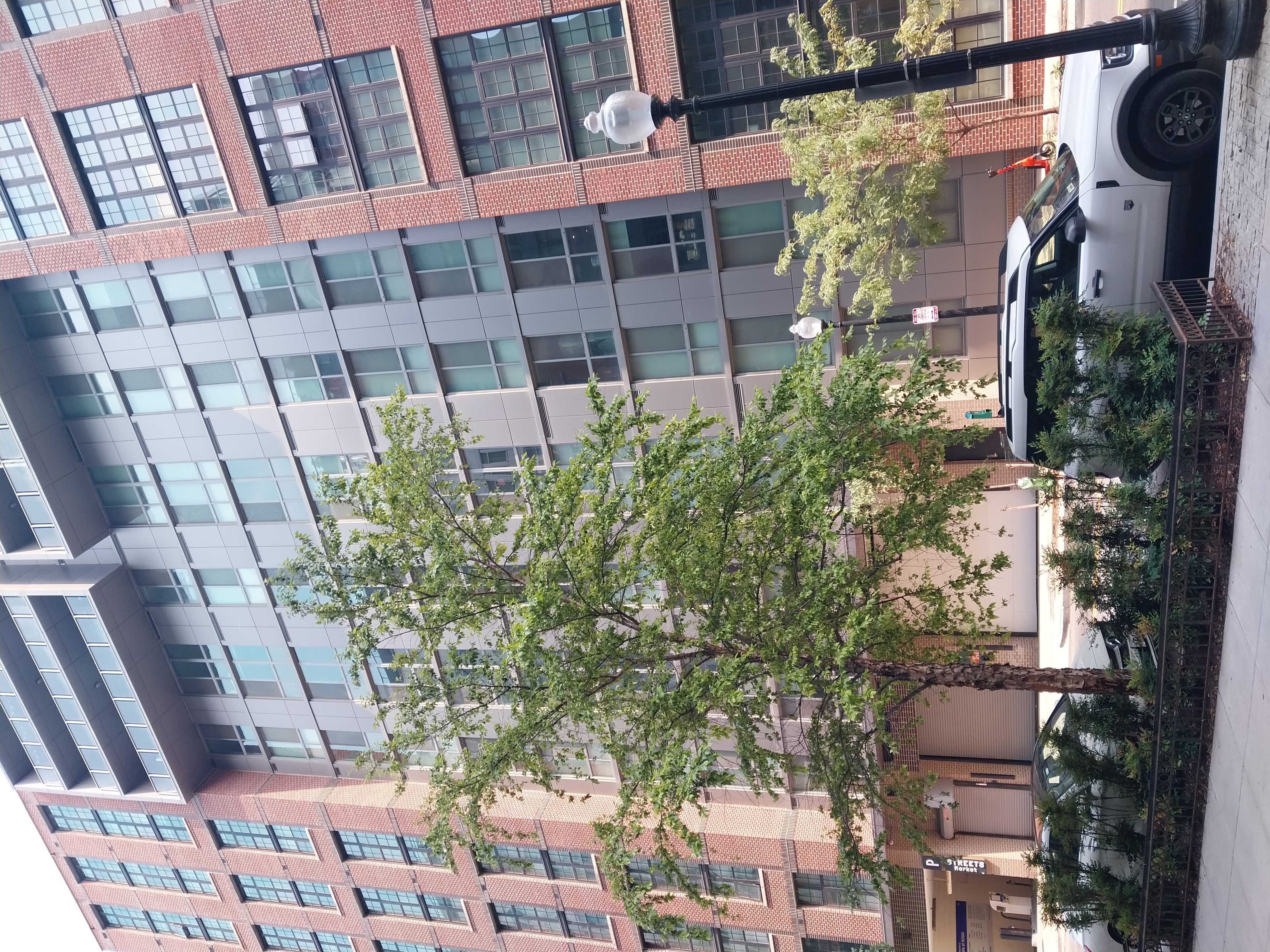
Today, I chose a street tree in NoMA to try to identify.
It’s one of several on the South side of Pierce Street at roughly
38° 53′ 22″ N, 77° 2′ 7″ W (map
link).
This was my first time using the Peterson Guide to Trees and Shrubs. I tried to follow the key, which asks you about characters, to help narrow down the possible candidates. Examples of questions you have to answer along the way include: are the leaves are compound or single? Is the leaf arrangement alternate or opposite?
I thought the leaves were compound and alternate at first. If you make such a mistake early in the use of a key, you’ll end up looking a list of possibilities that bear no resemblance to the tree in front of you.
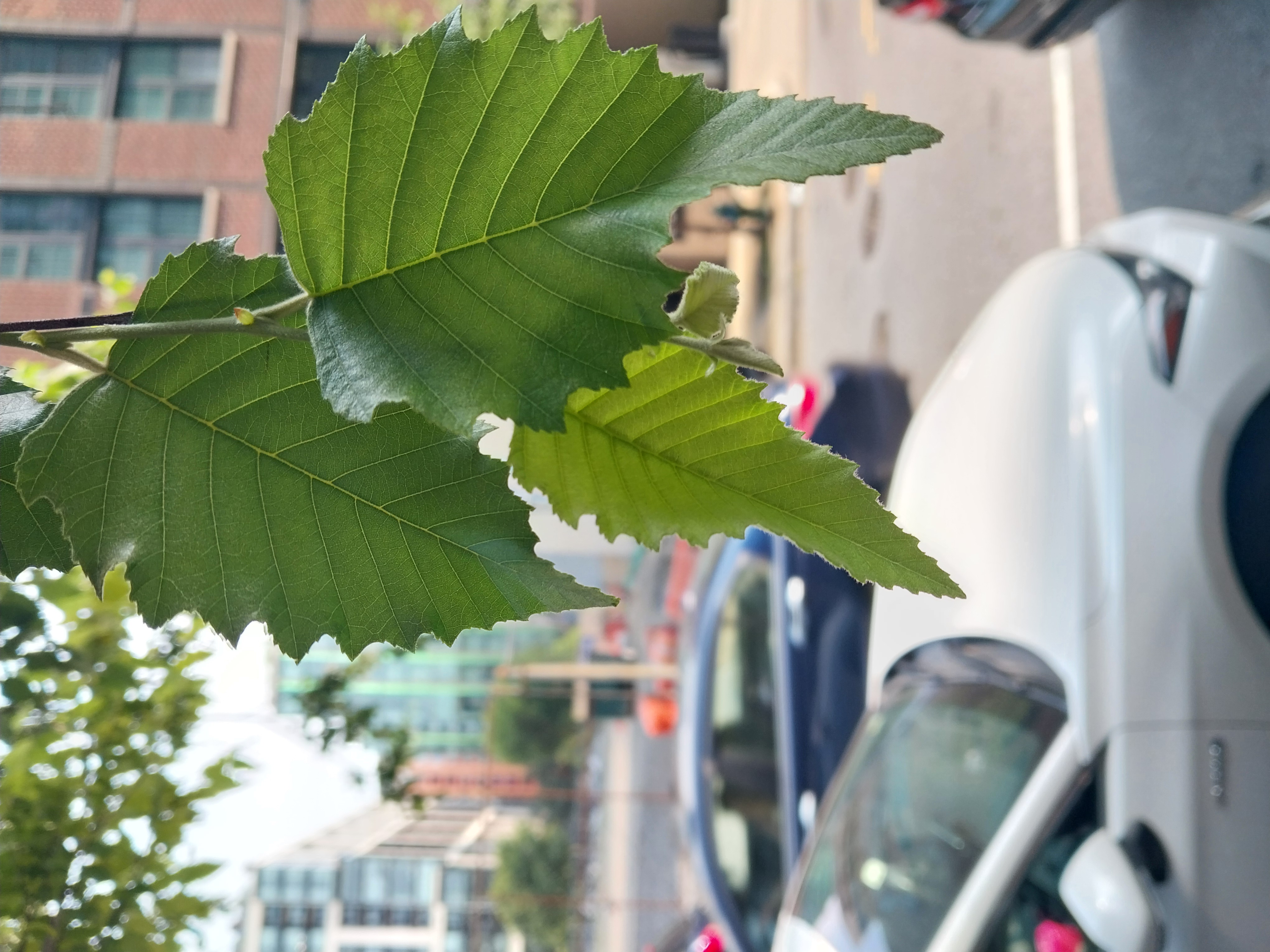
The trick to distinguishing compound versus alternate leaf arrangement is finding the bud. Where the leaf attaches to the twig, there is a bud. That is never the case with a “leaflet” (a component part of a leaf defined as what is attached at a point with a bud). Here is how Wikipedia puts it:
It can be difficult to tell the difference between a leaf and a leaflet, because leaflets look like a small leaf, but are actually a segment of a compound leaf and are also not attached to the stem. Leaflets do not ever have axillary buds.
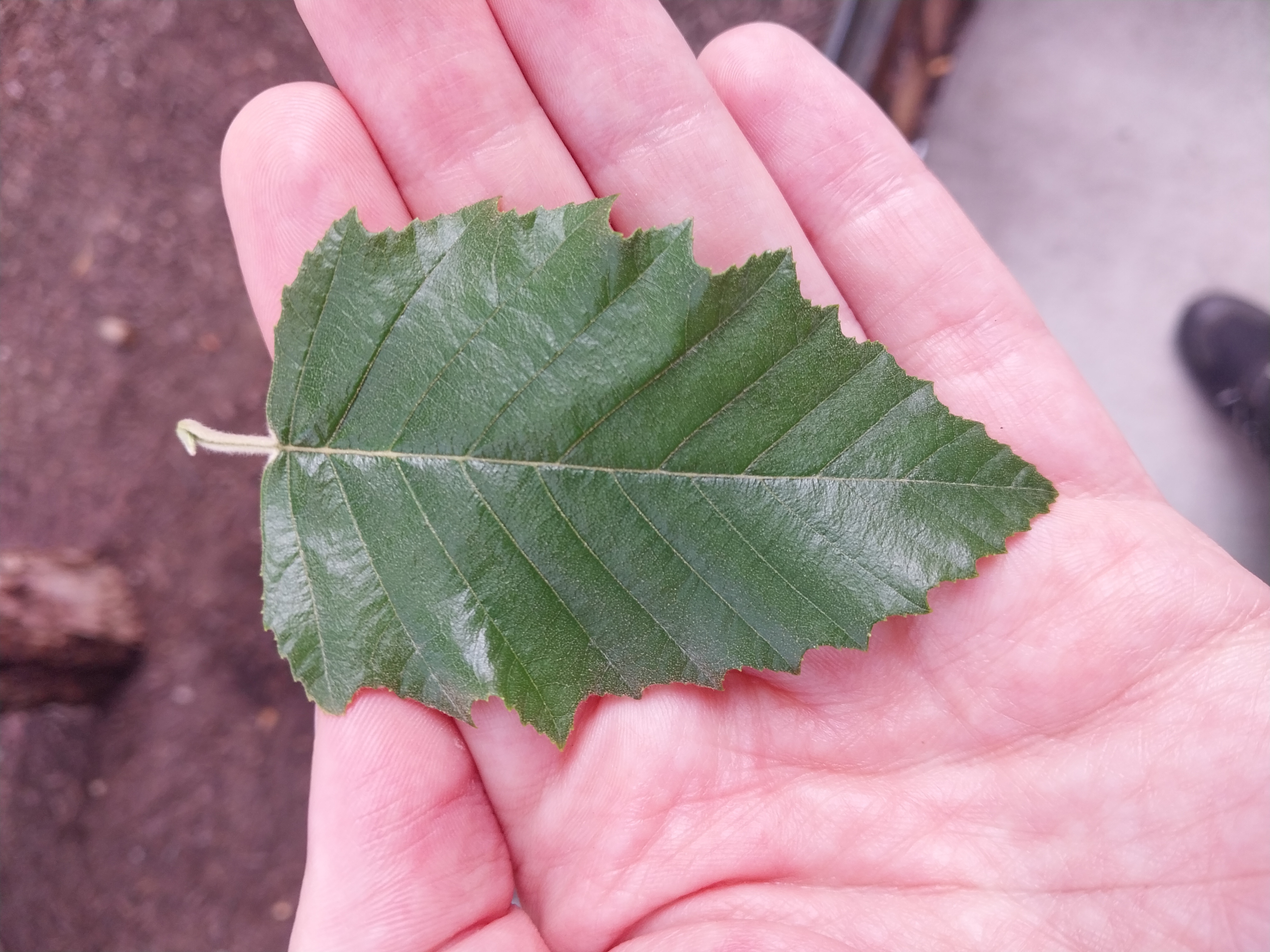
Finding myself deep in the key with no plausible options, I remembered that flaky bark is a characteristic of birch trees. So I looked up “Birch” in the index. I then realized this must be a River Birch (Betula nigra) based on the leaf shape. This then let me figure out that the leaf arrangement I was looking at was simple and alternate. This in turn led me to read up on the leaflet/leaf distinction. Progress!